The Five Design Myths Property Developers Need to Stop Believing
- Sep 24, 2025
- 5 min read
By Louise Wynne, Founder of WildKind Interiors
1. ‘Buyers want everything neutral.’
Developers often believe white is safe. And it is. But whoever made an impact being safe?
If you’re selling, and you’re worried about alienating buyers with colour on the walls, remember that buyers want spaces that feel alive and inviting; that make them feel something. You’re not going to get that with so-called "brilliant white" walls.
I put brilliant in inverted commas because it’s not actually brilliant at all. The super-bright, pure “brilliant white” developers love to spec is a modern, industrial invention; not something you’d naturally find in the environment. And as a result, it’s jarring for our eyes.
It doesn’t feel quite right. It’s not… natural.
Avoid! Avoid! Avoid!
And if you do avoid it, you’ll see how immediately your interiors are elevated for just a few pounds more (the difference between using brilliant white and a kinder off-white). It’s well worth the investment.
As I wrote in a blog post earlier this summer, UK Home Staging Colour Tips neutral-on-neutral doesn’t create warmth in our cooler northern light, and warmth is what we’re aiming for. So, your interiors, in effect, give people a hug when they walk through the door. We all like a hug, right?!
Add that missing depth in a subtle way through the use of soft greens, cinnamons and greige. And if you’re wondering what on earth greige actually is, it’s exactly what it sounds like: a mix of beige and grey. It works so well because it’s warmer than a cold grey, but without the often too-yellow/orange undertones of beige.
For more colour palette inspiration check out that very same colour tips blog referenced above. And if you want to read more about greige, this article breaks it down for you: The Spruce: Greige — The Best Neutral Colour Ever.
2. ‘Interior design is just cushions and colours.’
At WildKind Interiors we believe in Design First, Build Smarter, because the right design decisions at the right time can be the difference between profit and pain (and with development, there’s a fine line between the two).
Interior design isn’t just ‘fluff’ and a designer should be brought in as part of your power team from the get-go, working alongside your architects and project management team to manage costs in a variety of different ways (as well as, of course, making the development look great and stand out).
Read more about this in my blog: How to Save Thousands on Your Commercial-to-Resi Project.
I talk a lot on the property circuit about how interior design shouldn’t be an afterthought, and I always have people come to me at the end to say that they genuinely did think interior design is just about picking paint colours - and how they learned a thing or two.
Obviously, this makes my day (that they’ve been enlightened), and until people stop saying that, I’ll keep talking about it.
You don’t know what you don’t know, right?
3. ‘It doesn’t matter what lighting I pick.’
Lighting is one of the most overlooked parts of a project, and yet it makes so much difference.
Poor lighting kills the atmosphere! Think I’m being dramatic? I promise you I’m not. It makes even the best finishes look cheap. Developers often choose the lowest-cost downlights they can find with cold, bright light, and then wonder why the finished property looks off.
The right lighting makes spaces feel bigger, brighter, and more aspirational and that translates directly into perceived value.
So, what’s the minimum every developer should be doing?
Ditch the cold, white downlights. Stick to warmer, softer LEDs (around 2700–3000K) that feel inviting rather than clinical. Cold white light is for hospitals, not homes.
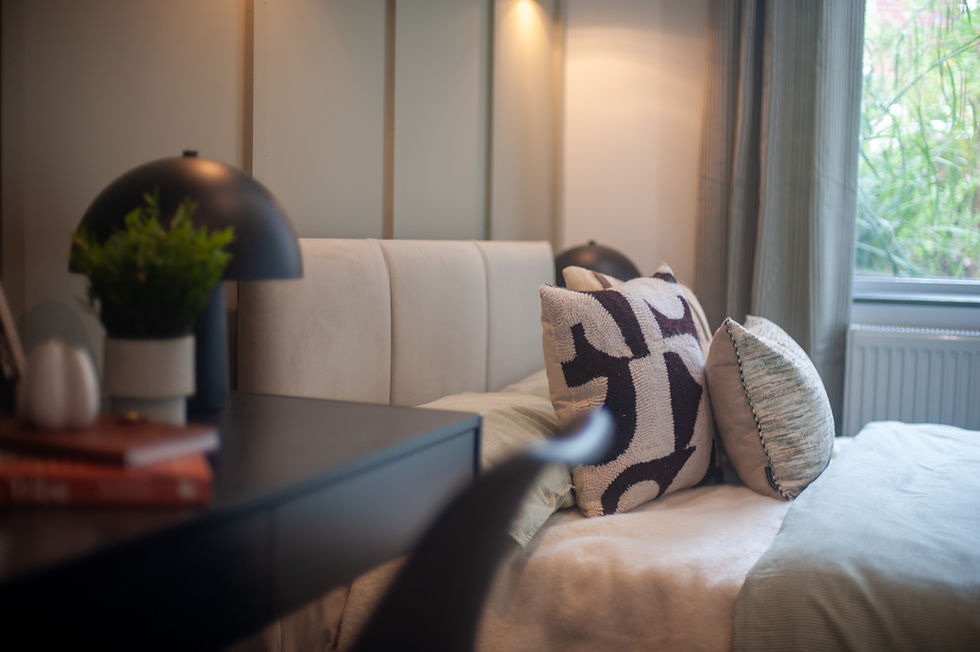
Layer your lighting. Don’t rely on one central light. Combine ambient (overhead), task (pendants, desk lamps), and accent lighting (wall lights, floor lamps) to create depth and mood.
Think about placement, not just fittings. A light stuck in the middle of the ceiling won’t do your design any favours. Plan early so lighting highlights key features: kitchen islands, artwork walls, or cosy seating zones, rather than leaving rooms flat and soulless.
If you’re flipping a property on a tight budget, you still need to think about how to make it stand out from the competition. Lighting is one of the most cost-effective ways to elevate the look and feel.
In addition, staging should be non-negotiable. I’ve staged plenty of £200,000 homes this year, and the results prove it’s an effective marketing tool no matter what the property value.
If all you can stretch to is a central pendant light, staging will step in with ambient lighting through floor and table lamps. That way, buyers still walk into a space that feels warm, lived-in, and aspirational.
Good lighting isn’t a ‘finishing touch.’ Get it wrong and buyers feel it instantly, even if they can’t put their finger on why.
4. ‘Staging is an unnecessary extra cost.’
If you’ve followed me for a while, you’ll know I’ve banged this drum a lot. In blogs like Why You Shouldn’t ‘Test the Market’ with an Empty Property, I’ve shown that staged homes sell faster (up to 50% faster) and often above asking price.
In today’s market, it’s more difficult to achieve a higher asking price but you will always get maximum value for the property. And staging will always sell your property faster than if the property was empty.
See these before and afters for exactly why that is.


Developers who skip staging often pay more in holding costs than the staging would ever have cost them. It’s not an extra. It’s a tried-and-tested part of any developer’s sales and marketing strategy, whatever the property value.
5. ‘People can imagine what it will look like. They don’t need help’
I still hear this. And I get it.
You can very clearly see how this property is going to function for people. It makes perfect sense.
But… (and it’s a big but) other people aren’t like you. They haven’t been working on your development for the past XXX months or years. They’ve not lived, slept and breathed it. They aren’t trained to visualise the finished product like you are. They actually don’t care like you do, either.
And cognitive science backs this up. Most buyers (9 out of 10, according to reports) struggle to picture scale or lifestyle without visual cues. Empty rooms confuse people. Staged rooms sell the dream. If you’re banking on buyers’ imagination, you’re leaving money on the table.
There are still so many agents out there who are advising clients not to bother with staging and with that in mind, I’m super happy to reference this estate agent who’s written a blog about it: Martin & Co — Tips for Selling (and Viewing) an Empty Property.
About the author: Louise Wynne has been working with house builders and property developers since 2006. Combining interior design and styling with her colour psychology expertise, Louise gets to the heart of her clients' requirements.