Right, let’s get one thing straight before we dive in. The only trend that truly matters is designing for your buyers, tenants, or guests. Full stop.
But hear me out, because 2026 is looking rather different. There’s a shift towards design that actually makes commercial sense. Design with staying power. Design that won’t have you ripping it all out in 18 months because it screams “so 2026.” See, for example, this article by Homes and Gardens.
Before you switch off thinking this means boring beige boxes, you know me enough by now to know that ain’t happening on my watch! Not following a trend doesn’t mean your developments need to be dull, expensive, or lacking personality. Quite the opposite, actually.
So here are my five macro trends for 2026. “Macro trend?” They’re the trends with real staying power. And then for good measure I’ll throw in a few mini trends (the expensive mistakes) you might be wise to ignore completely.
The Five Macro Trends for 2026
1. Biophilic Design: Beyond Houseplants
First things first: what actually is biophilic design? Because it goes well beyond popping a Swiss cheese plant in the corner.
Biophilic design is about connecting humans to nature through the built environment. The term comes from ‘biophilia’ – literally “love of life.” It’s rooted in the fact that humans evolved in nature and spent 99% of our evolutionary history outdoors. We’re biologically coded to respond to natural elements. And this doesn’t suddenly stop being true just because we now spend 90% of our time indoors. We still need this connection for our physical and mental health.
What Does Biophilic Design Actually Do?
Studies show it reduces stress and anxiety, improves cognitive function and focus, lowers blood pressure, increases dopamine and serotonin production (basically the happy chemicals), and speeds up healing. In property terms, this translates to: people will pay premium prices for homes that make them feel this way.
In wider society, where biophilic design is introduced, employee productivity improves by up to 15%, hospital stays shorten, and employees take less sick leave. It’s that powerful.
The Three Categories of Biophilic Design
Biophilic design isn’t just one isolated element. Done properly, it works across three categories:
Direct experiences: Actual natural elements. Water features that sound like real water (not a plastic fountain). Living walls connected to natural lighting and wood finishes throughout. Vertical gardens integrated with the architecture, not tacked on as decoration. Maximised daylighting through considered window placement. Raw stone countertops. Untreated wood. Clay walls. It’s not about one element in isolation but everything working together.
Indirect experiences: When you can’t do the real thing, you invoke nature symbolically. Natural colour palettes (earth tones, muted greens, warm terracottas). Organic shapes in furniture and architectural details, curves instead of harsh lines. Wood textures and natural materials. These create a psychological response even without literal plants.
Spatial experiences: This is the nuanced bit. Rooms designed with places to retreat to such as cosy reading nooks or by contrast spaces with open sightlines and horizons that make people feel safe and in control or most excitingly, hidden elements that invite exploration.
What biophilic design is NOT: A single potted plant in the corner. Fake plants. One feature wall with greenery but cold materials everywhere else. Natural elements that feel disconnected from the overall space design. Tick-box greenwashing.
Why Biophilic Design Matters for Developers
For 2026, expect biophilic design to become the baseline expectation, not a luxury add-on. The commercial ROI is undeniable. And when potential buyers walk into a space that makes them feel calmer and more grounded, they’re more likely to buy. It’s that simple.
How to do it properly:
-
Use natural materials like wood, stone, and natural fibres throughout
-
Maximise natural light with considered window placement
-
Create seamless transitions between indoor and outdoor spaces
-
Layer textures that feel organic, not synthetic
-
Choose materials that age gracefully, developing character over time
The beauty of biophilic design? It’s not a trend in the traditional sense. Humans evolved in nature. Green is the colour our eyes process most easily. This isn’t fashion, it’s biology. Which means it’s as close to future-proof as you’ll get.
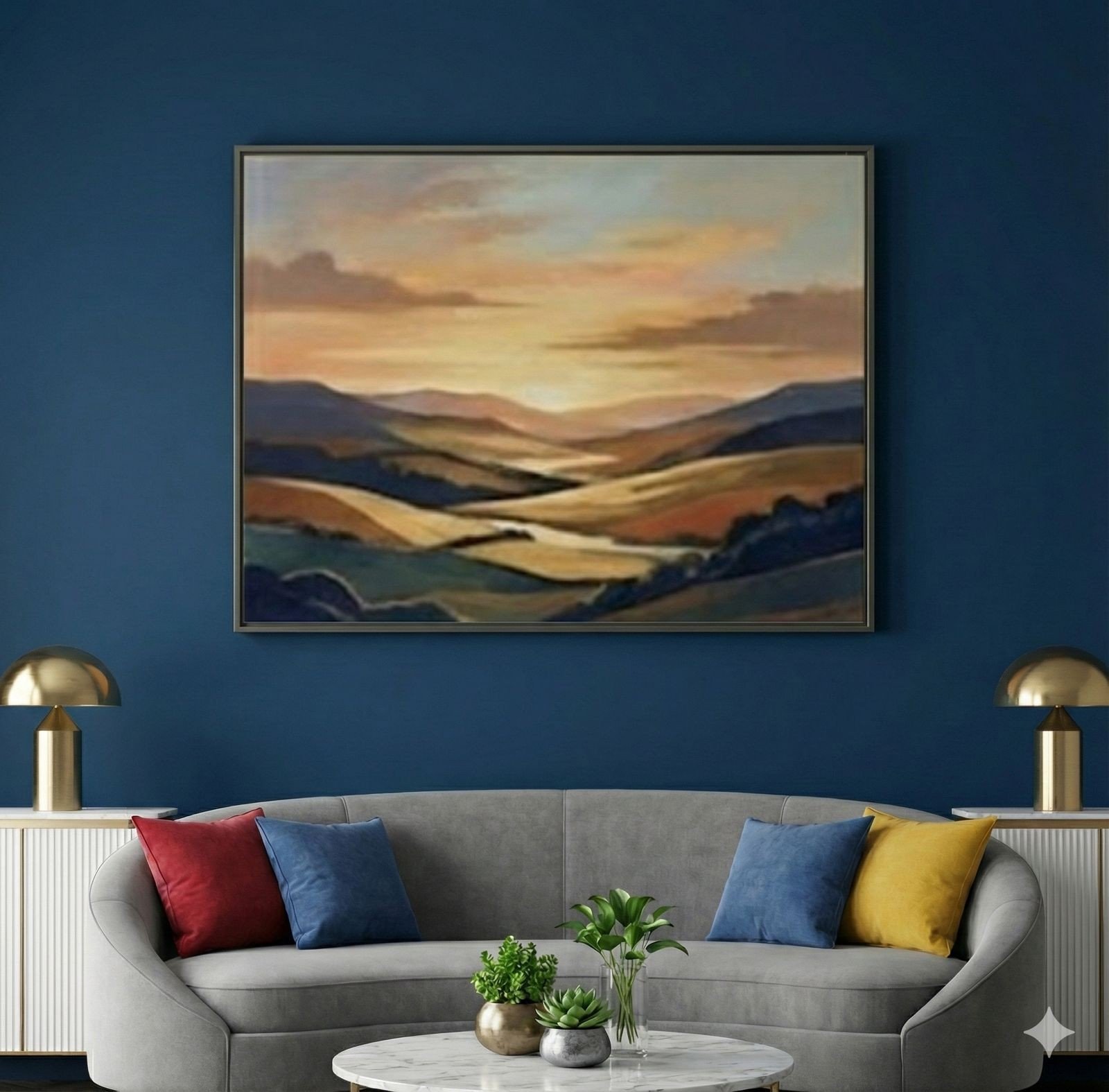
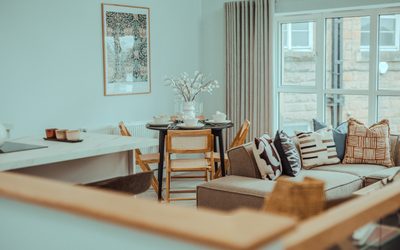
Curved furniture gives a more organic feel to the space.
2. Warm Authenticity Over Cold Perfection
Thank goodness; the era of cold greys and stark white everything is finally, properly over.
What’s replacing it? Warmth. Authenticity. A feeling of being grounded.
Think warm neutrals: terracotta, ochre, sand, caramel, mushroom, taupe. These aren’t just pretty colours (though they photograph beautifully for your marketing materials). They’re psychologically proven to create welcoming spaces in our cool Northern hemisphere light. They make people want to stay.
Material Honesty in Interior Design
The other shift? Material honesty. Buyers are craving surfaces that age well rather than looking perpetually showroom-perfect. Honed stone instead of high-polish. Leather that develops a patina. Cork. Textured plaster. Limewash paint.
This is what I call “lived-in luxury”, and it’s commercially brilliant. Why? Because it gives your development a sense of quality and permanence without the sterile, untouchable feel that actually puts buyers off. People want to imagine their lives in these spaces, not feel like they’re walking through a museum.
For developers, this means:
-
Swap cold greys for warm neutrals with actual depth
-
Choose materials with texture and character
-
Invest in finishes that improve with age, not deteriorate
-
Stop trying to make everything match perfectly (more on that later)
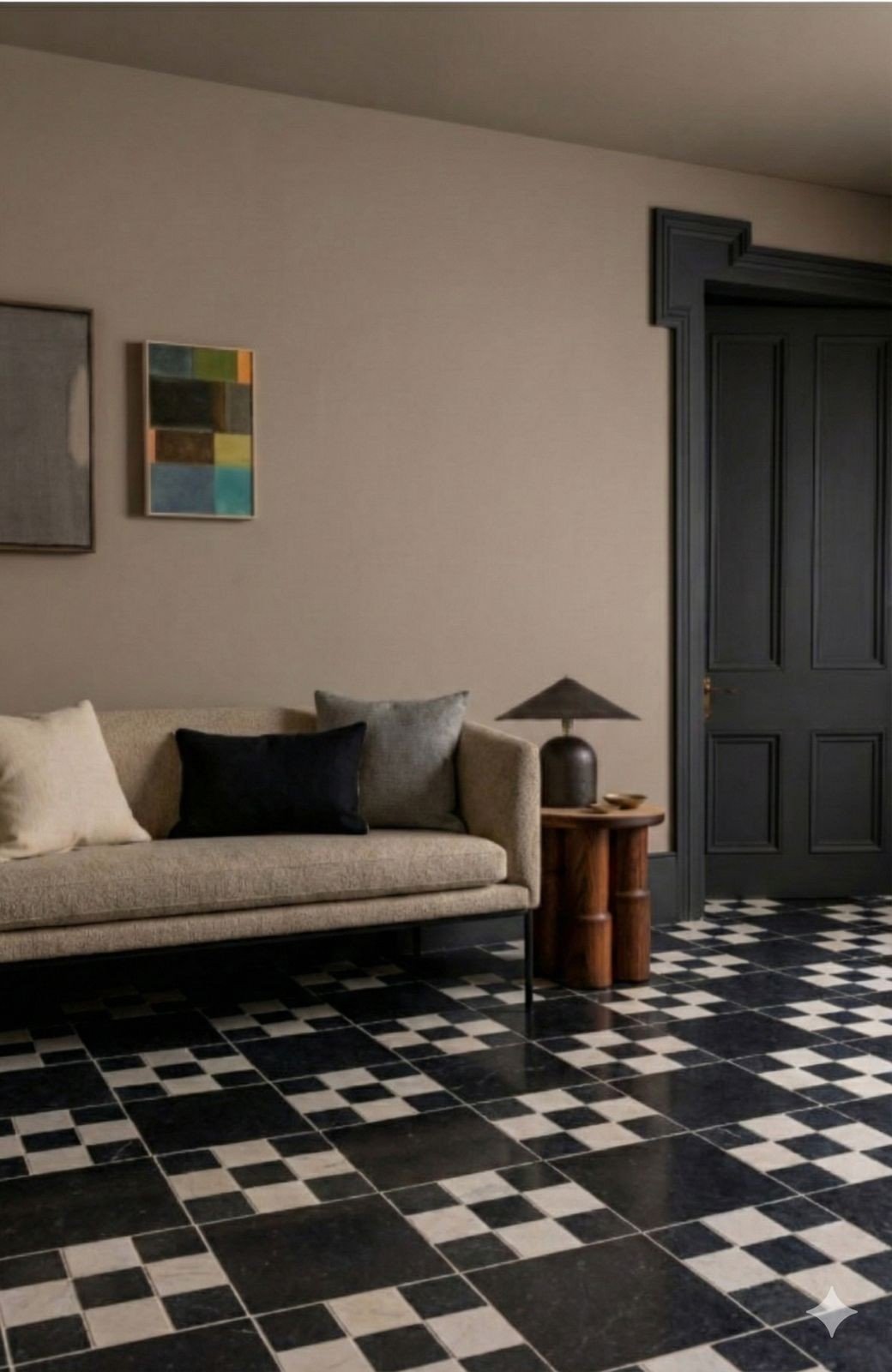
Statement flooring makes a great alternative to statement walls.
3. Wellness Design: Beyond Buzzwords
In 2026, wellness is no longer just an interior design consideration. It’s influencing architectural decisions too. We’re seeing circadian lighting systems that adjust throughout the day. Air quality monitoring as standard. Acoustic design that reduces noise pollution. Even spa-inspired bathrooms and home saunas are on the rise.
The developers who get this right will command premium prices. Why? Because post-pandemic, people understand that their home environment directly impacts their physical and mental health. They’re willing to pay for spaces that support their wellbeing, not just look good in photos.
Practical Wellness Applications for Property Developers:
-
Specify lighting systems that can be layered and dimmed
-
Consider acoustic treatments in open-plan areas
-
Use low-VOC materials and non-toxic finishes throughout
-
Design bathrooms with hotel-spa sensibilities: quality over flash
-
Integrate natural ventilation where possible
4. The Death of Open-Plan and Rise of Intentional Spaces
Here’s a trend I’m genuinely excited about: open-plan is dying.
After years of developers knocking down every wall in sight, buyers are crying out for defined spaces again. Not closed-off 1990s box rooms, mind you. Intentional zones. Spaces with purpose and mood.
We’re talking conversation corners, reading nooks, quiet work zones, TV snugs (who can watch the telly properly when someone else is cooking – really?). Rooms that feel intimate and considered, not like Piccadilly Circus!
Why Broken-Plan Layouts Make Commercial Sense
This is brilliant news commercially because it gives you flexibility. A two-bed can serve young professionals (home office + bedroom) or small families (two proper bedrooms). A larger property can appeal to multi-generational buyers who need private zones.
The key? Modular thinking. Spaces that can transform based on how people actually live, not how some architect thought they should live.
Consider:
-
Architectural elements that create separation without walls (arches where they make sense, not gratuitously)
-
Zones within larger spaces rather than complete open-plan
-
Multi-functional rooms with proper planning, not afterthought “flex spaces”
-
Thoughtful positioning of intimate seating areas
5. Sustainable Interior Design as Standard Practice
Sustainability doesn’t mean you need solar panels and battery storage everywhere. A single air source heat pump, paired with smart material choices gets you most of the way there. That’s achievable within real developer budgets.
The real win? Sustainable materials that are genuinely cost-competitive (or cheaper) than mass-produced alternatives.
Budget-Friendly Sustainable Design for Developers
Real sustainability in 2026 development looks like:
-
One solid renewable energy element (air source heat pump is perfect)
-
Smart material choices that cost the same or less than alternatives
-
Finishes designed to age well, reducing replacement costs
-
Circular economy thinking: will this material end up in landfill or can it be reused?
-
Local sourcing where possible to reduce transportation and support the local economy
Forget greenwashing. Forget trying to tick every sustainability box. Focus on one or two genuine moves that fit your budget and align with the authenticity buyers actually want.
Interior Design Trends to Avoid in 2026
Now for the fun bit. The trends that’ll make your development look dated faster than you can say ‘I heart grey!’
Overly Coordinated Interiors
Buying everything from one collection because it’s easy rarely leads to a strong result. There’s very little design thinking in it, and it shows.
Also, what about the assumption that neutral equals luxury. It doesn’t. It just means safe. And safe is exactly why everyone ends up doing the same thing. The same beige bedroom, the same soft taupe headboard, the same “inoffensive” scheme that no one remembers five minutes after they leave.
The interiors that really land are layered and considered. They feel like someone has made deliberate choices, not defaulted to a matching set because it was quick or because neutrality felt like the least risky option.
Buyers don’t want to walk into something that feels lifted straight from a catalogue. They want to feel the space has been properly thought through and designed for them. Not assembled in one click, not designed to offend no one, and not relying on the myth that playing it safe somehow equals premium.
Fluting Everywhere
Look, fluting had a moment. A good, long moment. But when the same detail appears on every sideboard, bar cabinet, wall panel and kitchen unit across the country, it stops being a thoughtful design choice and becomes a big yawn.
If you’re still specifying fluted everything, you’re about two years behind the curve.
Eek, sorry!
Single Accent Walls
The lone accent wall is so 2015. If you want drama, commit properly. Colour-drench the room. Or use textured finishes throughout. But that single wall of bold wallpaper flanked by magnolia or white? Amateurish!
If a feature wall is appropriate for the space, team it with other colour of similar depth of tone.
Why Anti-Trends Matter for Property Developers
Every time you chase a micro-trend, you’re dating your development. And dated developments sit on the market longer, require price reductions, and ultimately eat into your profit.
The macro trends I’ve outlined? They’re rooted in human psychology, environmental responsibility, and genuine livability. They’re not going to look embarrassing in three years because they’re not actually trends at all.
Your job as a developer isn’t to follow what’s on Instagram this week. It’s to create spaces that your target market will want to buy, rent, or stay in. Spaces that work five, even ten years from now. Spaces that stand the test of time.
Ready to Create Interiors with Longevity?
At WildKind Interiors, we don’t chase trends. We design commercial interiors that maximise your ROI while having genuine staying power. Because we design with your end-user in mind, not the design crowd on social media.
If you’re ready to create developments that sell faster and for more money because they’re actually designed for how people want to live, let’s chat.
About the author: Louise Wynne lives in Yorkshire and has been working with house builders and property developers nationally since 2006. She specialises in helping SME developers understand how strategic interior design drives return on investment, faster sales and stronger buyer perception. Combining interior design and styling with colour psychology expertise, Louise gets to the heart of what buyers actually want and what moves a development commercially.