


What Makes a Showhome Actually Sell Homes. (Not just look good)
- May 7
- 7 min read
By Louise Wynne, Founder of WildKind Interiors
March marked 20 years of me working in Interior Design.
So much has (of course) changed in those years - the biggest impact unsurprisingly coming from the www and social media. Once upon a time we were browsing three‑inch catalogues of furniture and artwork and now it’s all at the click of a button.
Oh! And everyone thinks they’re an Interior Designer now too, right?! Just like everyone thinks they’re a writer, or a marketing expert, or basically anything else, such are the wonders of technology, and the pitfalls.
Anyhow, it got me thinking about the showhome design briefs I’ve heard and had over the years; the good, the bad (usually no brief or no real understanding of what it should be), and the ugly (more on that in a minute).
And then it got me thinking about the ingredients that make a great showhome. So if you’re working with one – maybe you’re selling plots from one, maybe you’re debating if you need one, maybe you know you will down the line – here’s my take on what actually works and why, whether you’re an SME developer, a regional housebuilder or an investor working with showhomes.
In short: a great showhome isn’t about being the most “interesting” design in your portfolio. It’s a sales tool that should shorten your sales period, protect your GDV, and make each viewing feel like the obvious "yes" for the right buyer.
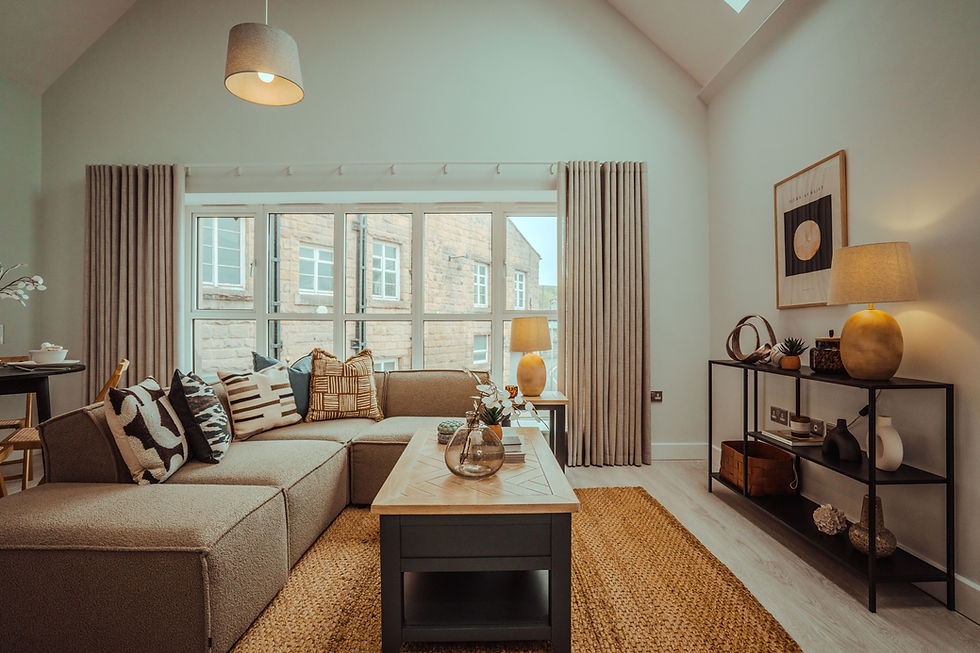
1. Start with the buyer, not the Sales Director’s taste
This is a biggie.
Things I’ve heard over the years from sales professionals:
“I don’t like blue.”
“I don’t like that cushion fabric.”
“That style is never going to take off.”
(For the record, “that style” was Scandi… which has been going strong for most of my 20 years in design.)
I hate to tell you but your personal taste, and mine, is irrelevant if the people actually buying the homes don’t share it. A showhome that flatters internal opinions but leaves your buyer cold is a very expensive piece of self‑expression, don’t you agree?!
A commercially effective showhome starts with a clear client avatar:
Who’s buying or renting?
What do they earn and how do they spend?
What car do they drive, what brands do they recognise?
How do they spend Friday night and Sunday morning?
That avatar shapes everything from layout to finishes:
A young professional couple might prioritise a sleek kitchen, a spot to work from home, and somewhere to entertain.
Downsizers might care more about comfort, ease of movement, and somewhere for visiting grandchildren.
I talk more about building that profile here:
When you’re spending serious money on a showhome, the only question that really matters is: will this help my specific buyer see themselves here and move faster as a result?

2. Show how someone will actually live there
This is part of the customer avatar piece above and also relates to how the home functions day to day. First we have to make someone feel positive about the space the minute they walk in; then we have to show them that it genuinely works for the way they live.
My favourite example of how this has gone totally bonkers in the past is when a national housebuilder asked for the second bedroom of their three‑bed semi to be turned into… a bar.
You see, Sales Directors can get so bored with showhome design. They see dozens of different showhomes every year. I do get it. But there are only so many looks, and so many variations of that look – and we don’t have a limitless budget which also limits what’s realistic. There’s a finite number of coffee tables, dining chairs and fabrics available in the right price bracket at any one time.
However (you know what’s coming)… they are not the target market.
So whilst it’s important for the showhome to look great, 99 times out of 100 it doesn’t need to be “ground‑breaking”. Ground‑breaking is needed when the development or the architecture is genuinely ground‑breaking. Most of the time, the showhome has a very specific job to do: to appeal to a particular demographic and help you sell or reserve faster.
Turning your bedroom into a bar when there are only three bedrooms in the house and the people buying are either first‑time buyers (yes, they may love a bar) or downsizers (probably not), isn’t the best use of the space.
Our bar did look brilliant, and it was great fun to create. But did it actually resonate with the elderly couple we watched wandering back down the path from their viewing? I don’t think so.
That’s the key test for each room in a showhome:
Does this space clearly answer “What would we do in here?” for our actual buyer?
Or are we entertaining ourselves and potentially confusing them?
A good showhome removes friction: the buggy has an obvious home, the work‑from‑home spot is clear, there’s somewhere to host people, somewhere to hide the everyday clutter. That’s what helps buyers move mentally from “nice house” to “this would work for us”.

3. Design your showhome for feelings first, photos second (but don’t neglect either)
In a portal‑led market, your showhome has two jobs:
To photograph well enough that people book the viewing.
To feel so right when they walk in that they stop comparing you to every other tab they’ve got open on their laptop.
This is where colour and design psychology come in. The aim isn’t to throw in every trend from Instagram; it’s to use colour, texture and layout to create an emotional journey for your potential buyers. Sounds a bit woo woo but it’s a subconscious journey that we want them to experience to feel good about the property.
A few principles I use with developers:
Avoid flat grey schemes that sap energy and make finishes feel cheaper than they are.
Use deeper tones carefully to create intimacy where it helps (a snug, a main bedroom), not to make already modest rooms feel smaller.
Layer texture and contrast so photos have depth, but keep the overall palette coherent so buyers don’t feel “this is lovely, but it’s not us”.
The goal isn’t to win design awards; it’s to control how people feel, behave and decide in the space - and to do that in a way that still looks good in the brochure and online.

4. The commercial bit: what a high‑performing showhome actually does for you
From a developer or housebuilder’s perspective, a showhome only earns its keep if it shifts the numbers.
A well‑designed showhome should help you:
Increase perceived value per square foot
By showing well‑thought‑through layouts, smart storage and flexible spaces you make every square foot work harder in the buyer’s mind. That supports your price point and makes incentives less painful.
Shorten time on market and speed reservations
When buyers can instantly picture their life in the property, objections reduce and decision times shrink. Presentation and emotional connection are key drivers in faster sales for staged or well‑merchandised homes.
Reduce failed reservations and second‑guessing
If the showhome is honest to the product (no fantasy storage, no huge pieces that never fit in standard plots), buyers are less likely to feel misled when they view their actual unit, which can lower the risk of fall‑through.
Support your sales team’s narrative
A good showhome is laid out in a way that supports the route your team takes through the home, where conversations happen and where you handle objections, rather than fighting against it. The sales team on the ground know exactly what queries, questions and complaints people have about a particular housetype and how to counter this.
And it’s not just designers saying this! Consumer research backs it up. The HomeOwners Alliance, citing data from the Home Staging Association UK, reports that non‑staged homes spend an average of 99 days on the market, compared with just 41 days for decorated or staged homes – a clear illustration of how better presentation can materially speed up your sales pipeline, as outlined in their guide to home staging and speeding up your sale.

5. Common showhome mistakes that will cost you
After two decades of showhomes, there are patterns I see again and again – especially when there’s no clear brief.
A few of the big culprits:
Designing to impress head office, not the buyer
When the main goal is “We want something different to the last one” rather than “We want to convert viewings into reservations faster for this scheme” – don’t lose sight of who is buying.
Over‑trending and under‑thinking
Dropping in every current trend to keep things “fresh” can date a scheme overnight and if you’re hoping to keep your showhome for more than 12 months, this could well be a problem for you and mean you’re perceived more negatively than others who aren’t wedded to a trend.
Theme‑park rooms that don’t reflect real life
Bars in second bedrooms, unused “gyms” in tiny box rooms, or children’s rooms that bear no resemblance to what real families’ lives look like may be fun to install but can leave buyers thinking “I can’t see myself living here”.
This one is a biggie, and needs to be thought through with an architect…
Ignoring layout and flow because “we’ll fix it with furniture”
No amount of styling can make a fundamentally awkward layout feel generous and logical. The best showhomes start with getting the plan right: circulation, sightlines, furniture sizes, and key views and to get this right, you have to take it back to the start.
Each of these mistakes has a cost; sometimes subtle (slower absorption, more incentives), sometimes obvious (units that just won’t shift until something changes). The good news is they’re fixable with a clearer avatar and a more commercially led brief.

6. If you remember one thing…
If you remember one thing from this: contrary to the beliefs of some, a great showhome isn’t about wow for wow’s sake. It’s about designing for the person who will actually live there, in a way that supports your sales strategy, protects your GDV and reduces risk on the scheme.
If any of this has you looking at your current (or future) showhome a bit differently, and you’d like a second opinion, just shout. You can contact me here.
About the author: Louise Wynne lives in Yorkshire and has been working with house builders and property developers nationally since 2006. She specialises in helping SME developers understand how strategic interior design drives return on investment, faster sales and stronger buyer perception. Combining interior design and styling with colour psychology expertise, Louise gets to the heart of what buyers actually want and what moves a development commercially.


