The Top 5 Questions I Get Asked…as an Interior Designer on Commercial-to-Residential Projects
- Oct 1, 2025
- 5 min read
Updated: Oct 2, 2025
By Louise Wynne, Founder of WildKind Interiors
1. “When should I bring in an interior designer?”
As soon as you start thinking about the project. To get the best return on your investment (both the development investment and the interior designer) bring them on board when your planning application has been submitted, but before Stage 4, the technical design stage.
Too many developers still see interiors as the finishing touches, the décor, furniture, and soft furnishings. But design is far more strategic than that.
At WildKind, we call it Design First, Build Smarter. Why? Because every decision made in the early stages, from furniture and electrical layouts, to kitchens, bathrooms and joinery, has a direct impact on how desirable and valuable your finished property will be. If you wait until the plaster’s dry before bringing a designer in, you’ll be stuck with compromises, or worse, expensive redesigns.
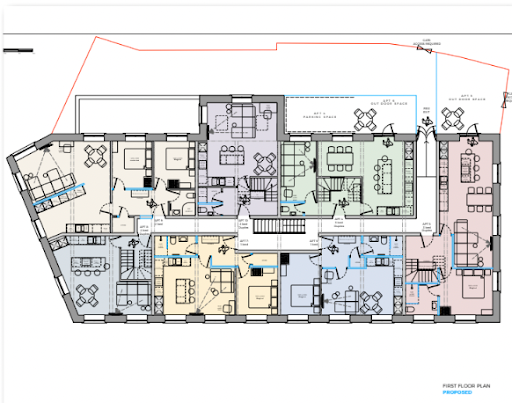
By feeding into GA (general arrangement) drawings, space planning, and tender packs at the start, we make sure the design intent runs through the entire build. That means contractors price more accurately, buyers walk into spaces that flow naturally, and the finishes align with what your target market actually wants. And let’s not forget GDV: an interior-led scheme sells faster and for more, protecting your margins and helping you move on to the next project.

So, in answer to the question: don’t bring an interior designer in partway through. Appoint one right at the beginning. That’s when design has the power to save you money, add value, and make sure you’re building smarter, not harder.
2. “How much does interior design add to the GDV?”
This is one of the most common questions I get from developers, and it’s understandable. If you’re investing in design, you want to know what the return looks like. From market research, including comparables, well-designed schemes add anywhere between 8% and 20% to the GDV.
Where does that come from?
Industry research: a combination of local comparables, in-depth market research, and discussions with estate agents who know exactly what sells (and what sticks) in that area.
My own projects: I’ve worked with a developer who spent £11k on design and staging and saved £100k on their estimated build cost. Others have shaved months off their sales timeline, crucial when bridging finance is ticking away.
Buyer psychology: It’s not just about pretty finishes. Buyers decide within 7 seconds how they feel about a space. That initial emotional response drives everything else, so developers ignore this at their peril.
So is it 8%, 12%, 20%? That depends on many factors. Every scheme, every market, every pool of buyers (tenants or guests) is different.
What I can tell you is this: design done well will always get you further than design done badly, or not done at all. And it’s rarely just about the finishes. It’s about creating a space that buyers instantly connect with, so they’ll pay the price you’re asking (and sometimes more) rather than chipping you down.
3. “Can’t my architect just do this?”
Architects and interior designers are both a vital part of a developer’s creative team but they do very different jobs.
An architect’s focus is on structure, compliance, and flow. In a commercial-to-resi project, that means reworking layouts so the new homes are functional, compliant, and efficient. They create the technical drawings, coordinate with engineers and contractors, and ensure the build meets planning requirements, building regs, and budget. Their expertise is making sure the homes work, the spaces are safe, practical, and deliverable.
An interior designer’s focus is on the experience of those spaces. We look at colours, textures, light, acoustics, and atmosphere. We consider buyer psychology: how quickly people connect with a property, whether they feel at home, and ultimately whether they’ll pay a premium for it. Our role is to take those functional layouts and turn them into places people genuinely want to live in.
I’ve seen developers lose tens of thousands fixing “small” details after the build, because the buyer experience wasn’t thought about early enough. When architects and designers work together from day one, you save money, protect margins, and deliver a development that people want to live (or stay) in and keep coming back for more.
4. “What’s the cost and how do I budget for it?”
Interior design fees vary (fixed, percentage, or package) depending on the designer. Every project is priced according to the brief and the building.
The services we offer at WildKind Interiors include:
Design Concept, Design Development & Design Intent Drawings (including FF&E schedules). Creating the overall vision, developing detailed layouts and finishes, and providing clear drawings and specifications so contractors know exactly what to build and source.

Development Brand Identity. Defining the look, feel, and positioning of your scheme so it appeals directly to your target buyer or tenant profile, helping you stand out in a competitive market.
Property Staging & Styling. Dressing empty properties with furniture and accessories to showcase lifestyle, scale, and atmosphere so they sell or rent faster and at the highest value.
The key is seeing interior design as an investment, not a cost. A £15k design spend can easily return six figures in uplift. Always budget separately for interiors rather than raiding the contingency.
5. “How do you choose colour schemes and finishes that appeal to buyers?”
It’s never guesswork; it’s objective design. The first step is always research: who’s the target demographic? Young professionals, downsizers, families, overseas investors? Each group has different expectations, lifestyle needs, and even subconscious emotional triggers.
If you don’t design with that audience in mind, you’re designing for yourself and your own preferences, but you’re not the buyer.
A good interior designer will always approach the scheme in this targeted way, aligning colour, texture, and finish with the psychology of your buyer profile. The colours selected, the materials specified, and the design style chosen all influence how people feel the moment they walk into a space.
This isn’t about personal taste. It’s about using knowledge, research, and experience to create interiors that feel right for the people you’re selling to. And that, as we know, ultimately drives faster sales and stronger returns.
Get in touch if you have any more questions or you'd like to work with us.
About the author: Louise Wynne has been working with house builders and property developers since 2006. Combining interior design and styling with her colour psychology expertise, Louise gets to the heart of her clients' requirements.