Right, let’s start with a clarification.
When most people hear “biophilic design”, they think houseplants and maybe a feature wall with some greenery. Nice to have. Moodboard fodder. Something you add at the end if there’s any budget left.
That’s not what we’re talking about here.
Because biophilic design done properly is one of the most commercially powerful tools available to you as a property developer. It influences how buyers feel, how quickly they decide, how much they’re willing to pay, and how long tenants stay.
Here’s what it actually means and how to use it in developments you’re selling or renting.
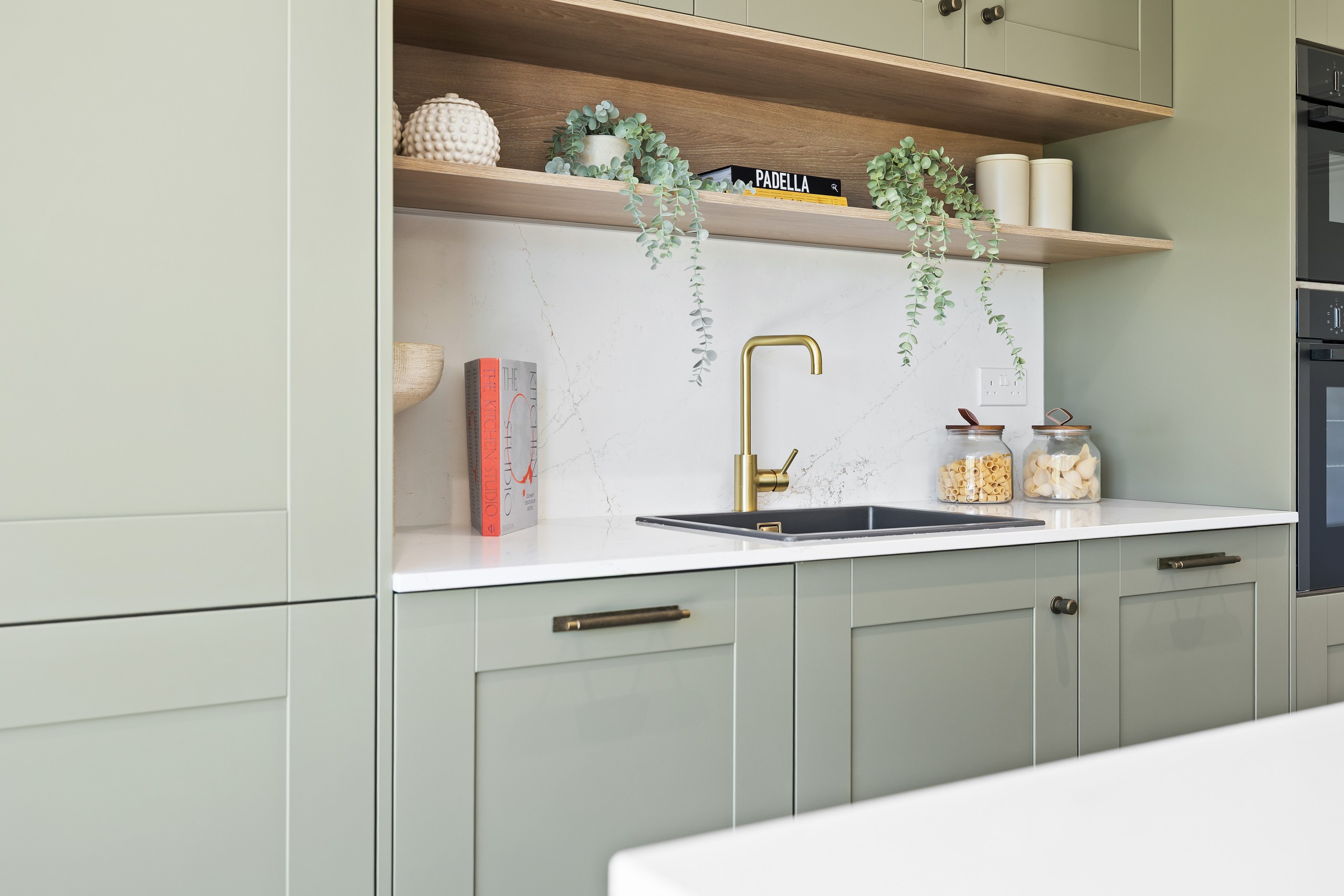
A kitchen with stone worktop and a mix of painted green and wooden cabinet doors and shelving.
What Biophilic Design Actually Is
The term comes from “biophilia” – quite literally, love of life.
But forget the terminology, because the principle is beautifully simple: humans evolved in nature. We spent roughly 99% of our evolutionary history outdoors.
Every sensory cue we’re wired to respond to, from dappled light and flowing water to organic shapes, earthy tones and the smell of wood, is a signal our nervous system reads as safe, calm, home.
Now we spend approximately 90% of our time inside, but our biology hasn’t changed.
How we live has radically shifted. We’ve invented new ways of building and working far faster than our bodies can adapt, so we’re now living in a mismatch between what we need and what most buildings provide. Biophilic design bridges that gap. It’s the practice of connecting humans to nature through the built environment.
Not through decoration, but through deliberate design choices that work with our hardwiring rather than against it.
The Commercial Case for Biophilic Design in Property
Let me give you the numbers, because I know that’s what matters if you’re looking at GDV and ROI.
Studies show biophilic design reduces stress and anxiety, improves cognitive function and focus, lowers blood pressure, and increases dopamine and serotonin production.
In wider society, where it’s been properly implemented, employee productivity improves by up to 15%, hospital stays shorten, and people take significantly less sick leave. In residential property specifically, homes designed with biophilic principles can command a 4 to 5% increase in sales value.
Research shared by the Journal of Biophilic Design in 2024 found that for every £1 spent on even modest biophilic enhancements, you could see £2.70 back.
In hospitality, guests have been shown to be willing to pay around 23% more for rooms with biophilic elements and views of nature.
The research from Terrapin Bright Green, one of the leading bodies in this space, indicates biophilic elements can increase building value by up to 7%, particularly in competitive urban markets.
And in retail spaces with vegetation and natural landscaping, customers indicated they were willing to pay 8 to 12% more for goods and services.
This isn’t interior design as decoration. It’s interior design as a financial strategy.
To find out more why not read: The Economics of Biophilia, Terrapin Bright Green
.
The Three Categories You Need to Design For
Biophilic design isn’t one element in isolation. Done properly, it works across three interconnected categories.
1. Direct Experiences
These are actual natural elements. Real ones. Not just suggestions of them.
Water features that sound like real water. Living walls connected to natural lighting and wood finishes throughout. Maximised daylighting through considered window placement; which, critically, costs nothing extra if you’re at the planning stage.
Raw stone countertops. Untreated timber. Clay wall finishes. Vertical gardens integrated with the architecture, not added on as an afterthought.
The word to hold onto here is integrated. One natural element dropped into an otherwise cold, synthetic scheme doesn’t create a biophilic environment.
2. Indirect Experiences
When you can’t do the real thing, you invoke nature symbolically. And this is where the psychology gets really interesting, because you don’t need a single living plant to create a biophilic response.
Natural colour palettes: earth tones, muted greens, warm terracottas, mushroom, ochre, sand. Organic shapes in furniture and architectural details. Curves and arches instead of harsh right angles.
Wood‑effect finishes. Linen, jute, and rattan. Botanical artwork. These all trigger a psychological response that reads as nature‑adjacent, even in an entirely enclosed space.
This is the category that’s most accessible for developers working to a budget, and it’s often underestimated.
3. Spatial Experiences
This is the nuanced one, and it’s where a lot of developers miss the opportunity entirely. It’s not about what you put in a space, it’s about how the space moves.
Rooms designed with places to retreat to: a reading corner, a window seat, a lowered ceiling zone. Or conversely, spaces with open sightlines and clear horizons that make people feel safe and orientated.
Changes in level. Arched doorways. “Hidden” corners that invite exploration. Indoor‑outdoor transitions that blur boundaries.
This category is rooted in what’s known as prospect and refuge theory; the evolutionary psychology concept that humans feel most comfortable when they can see clearly (prospect) and also retreat to safety (refuge).
Great spatial design does both.
What Biophilic Design Is NOT
A single potted plant in the corner. Fake greenery. One feature wall with a botanical print surrounded by cold, synthetic materials everywhere else. Natural elements that feel disconnected from the overall design intent. Tick‑box greenwashing.
The difference between genuine biophilic design and the imitation of it is something buyers feel immediately, even if they can’t articulate why. One makes them want to stay. The other makes them vaguely uneasy.
And once that first impression is made, it’s very hard to shift.
What Biophilic Design Costs (And Where It Pays Back)
This is where I want to be straight with you, because vague reassurances about biophilic design being “affordable” don’t actually help you budget a scheme.
The honest answer is: it depends entirely on how deeply you integrate and when you integrate it.
Low‑intensity integration: material upgrades, natural colour palettes, considered window placement, layered natural textures. It’s said choices such as these add approximately 1 to 3% to project value.
At this level, many of the choices are cost‑neutral with synthetic alternatives. Quality LVT with a wood effect, for example, achieves the biophilic look without the price of solid hardwood. Jute rugs, linen‑look curtains, and rattan accessories are genuinely affordable. Natural‑effect paint colours cost the same as any other paint.
Moderate integration: incorporating living walls, optimised daylighting, indoor‑outdoor transitions, and organic architectural details has a higher cost of around 3 to 8% of total project value.
High‑level integration, involving structural daylighting (analysing sunlight and orientation), façade redesign or mixed‑mode ventilation (using both fresh air and mechanical ventilation) moves to 8 to 15% or higher.
The single most important thing to know? Biophilic design costs significantly more as a retrofit than as a new build integration. Addressing daylighting at the planning stage costs little or nothing extra. Adding a skylight after the roof is built is a completely different conversation.
If you get design involved early (and I always say this) the commercial opportunity is far greater and the cost is far lower.
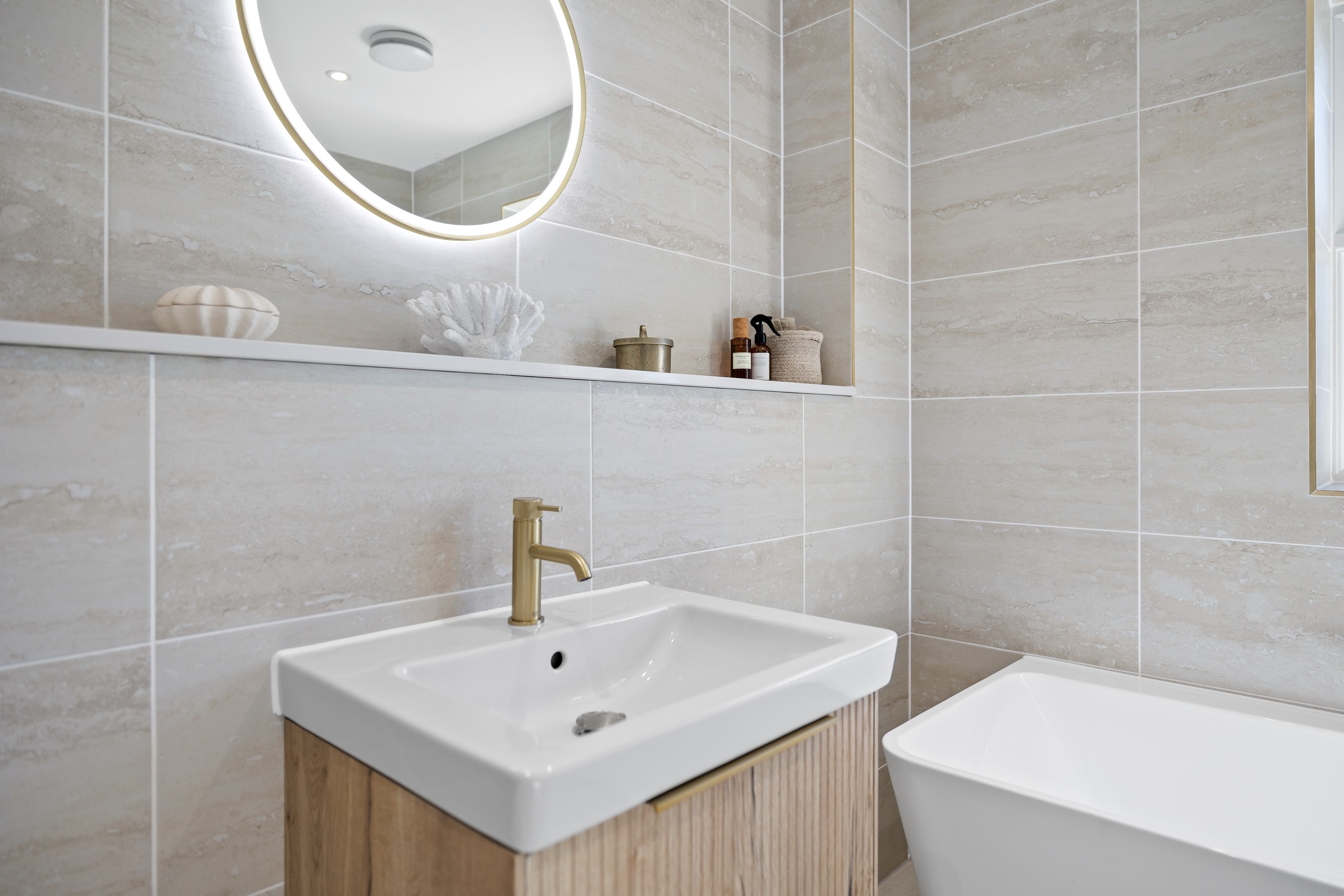
This bathroom layers travertine wall and floor tiles with a fluted timber vanity to create a warm, nature‑led feel.
Different Schemes, Different Priorities
Not every development needs the same approach. Here’s how to think about it by scheme type.
New Builds for Sale
This is where biophilic design has the most direct impact on GDV.
You’re building from scratch, which means the principles can be embedded at concept stage with minimal additional cost. Consider daylighting during the planning stage. Specify natural materials from the outset – they’re often cost‑competitive with alternatives when priced at volume.
Design for indoor‑outdoor flow with considered rear elevation treatments, threshold spaces, and good sightlines. A new build that makes people feel grounded and calm on a viewing is far more likely to generate stronger offers, faster.
The biophilic principles that make the biggest difference in sales are: maximised natural light, natural material finishes, and warm colour palettes rather than cold grey or pure white, because grey (as I never tire of saying!) has no positive psychological qualities whatsoever.
Showhomes and Staged Properties
A showhome is your highest‑performing sales tool. It’s where biophilic design at the indirect and spatial level delivers the greatest return for the investment, because you’re creating an emotional experience that needs to convert a viewer into a buyer within a single visit.
Focus on: a warm, nature‑anchored colour palette; organic shapes in furniture and accessories; real wood and stone touches at the specification level where possible; layered natural textures throughout (linen, wool, timber, ceramics); live planting that is real, healthy, and properly maintained; and considered lighting that mimics natural light quality rather than flat, overhead fluorescents.
The staging investment here isn’t decoration, it’s a sales tool with measurable ROI.
HMOs
In shared living, biophilic design is directly tied to tenant satisfaction, occupancy rates, and void reduction. Tenants who feel calm and well in their space are more likely to stay longer, look after the property better, and recommend it to others. All of which protects your yield.
Practically, the priorities for an HMO are:
-
Communal spaces that feel genuinely restorative, not clinical; warm colour, natural texture, live plants
-
Bedrooms designed as proper retreats, with a sense of enclosure, good natural light, and calming biophilic palettes
-
Shared bathrooms that reference spa sensibilities; natural materials, warm tones, quality over quantity
-
Maximised natural light throughout, especially in internal areas that can feel basement‑like
The budget doesn’t need to be high. At the indirect experience level (colour, texture, material quality) the returns on a relatively modest investment in biophilic principles are significant.
Serviced Accommodation and Holiday Lets
This is arguably where biophilic design has the most dramatic effect on your bottom line. Guests willing to pay around 23% more for rooms with natural elements and views isn’t an abstract statistic when you’re managing a short‑term let with nightly pricing.
In serviced accommodation, the guest’s emotional response on arrival sets their entire experience, their review, and whether they rebook. A space that makes people feel calmed and connected, that has warmth, natural materials, texture, considered light, a real plant that’s alive and thriving, creates a level of perceived quality that outperforms the specification cost.
It photographs beautifully, which matters enormously on Airbnb and booking platforms. And it generates the kind of reviews that justify higher nightly rates.
For holiday lets in particular, lean into the location. A coastal let drawing the palette from the sea, the sand, the pebbles. A countryside property that speaks to the landscape it sits in; earthy, textured, warm.
The biophilic connection isn’t just about plants; it’s about the entire sensory experience of the space telling the guest that they are somewhere away from the everyday.
Commercial Conversions and Apartments
The challenge with conversions is often the building fabric itself: limited glazing, awkward layouts, low ceilings, urban locations without natural outlook. This is where indirect biophilic strategies become especially important.
When you can’t bring in light, bring in the suggestion of nature through colour and material. When you can’t open onto a garden, create spatial interest through arches, varied ceiling heights, and considered sightlines.
Where views are urban rather than green, use materials, texture, and planting internally to compensate. Every intervention doesn’t need to be structural to be effective.
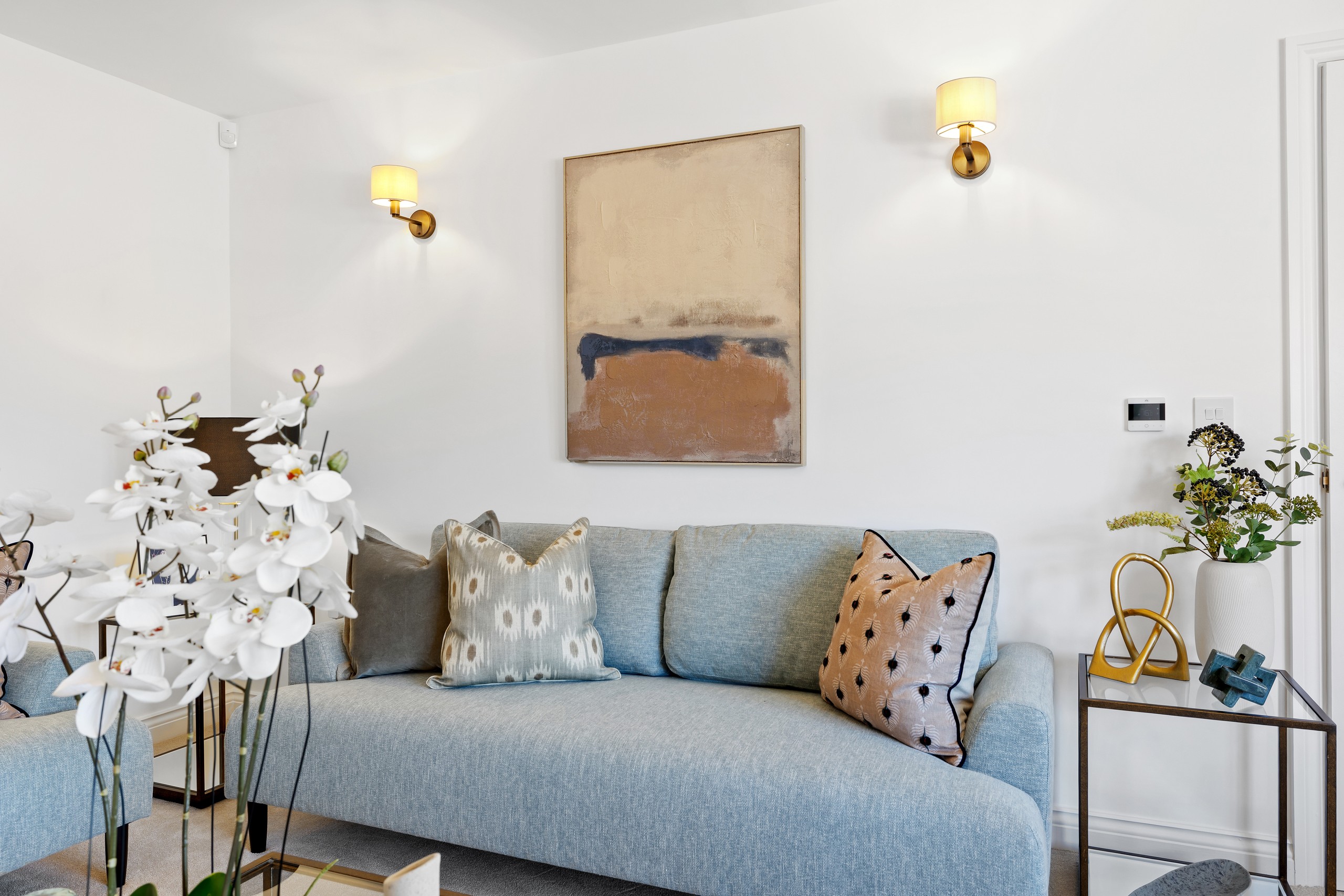
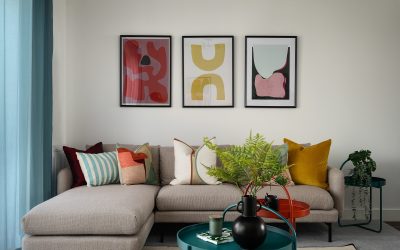
Warm, earthy colours in the artwork and soft furnishings instantly warm up the space.
The Practical Starter List (By Budget)
If you’re working with a tight budget and you want the best biophilic return for your spend, here’s where to focus first.
Zero or near‑zero cost (design decisions, not spend):
-
Window placement and orientation at planning stage to maximise natural light
-
Considering prospect and refuge principles in the spatial layout; in simple terms, creating both open sightlines and places to retreat to. That might mean being able to see straight through from the hallway to a bright garden‑facing living space, while also including a window seat, reading nook or a quieter corner that feels enclosed and calming
-
Specifying warm biophilic colour palettes rather than cold grey or stark white
Low cost:
-
Natural‑effect LVT flooring instead of synthetic carpet or high‑gloss tile
-
Jute rugs, linen‑effect curtains, rattan accessories and woven textiles
-
Earth tone, nature‑anchored paint colours; warm neutrals, sage greens, terracottas
-
Healthy, living plants (not plastic) maintained properly
-
Natural wood occasional furniture rather than melamine or MDF‑look finishes
Medium investment:
-
Real timber flooring or timber stair details
-
Stone or stone‑effect kitchen and bathroom surfaces
-
Layered lighting to create different moods and reference natural light quality
-
Considered indoor‑outdoor threshold (even a modest one; a deck, a step down, a view framed by a window)
Higher investment (most impactful at new build stage):
-
Structural daylighting decisions
-
Genuine living wall systems with proper irrigation and maintenance planning
-
Architectural organic detail; arches, curved walls, varied ceiling heights
-
Seamless indoor‑outdoor transitions with quality glazing
Why Biophilic Design Isn’t Going Away
So like I said at the start, biophilic design is not a trend. Trends are driven by fashion. This is driven by biology.
Green is the colour our eyes can process more shades of than any other. Natural forms reduce cortisol. Organic materials trigger feelings of safety and permanence. Our brains have been making these calculations for hundreds of thousands of years. No design era is going to change that.
What will change is buyer expectations.
For 2026 and beyond, biophilic principles are moving from differentiator to baseline. The buyers and tenants walking through your properties will increasingly know what a biophilic space feels like; because they’ll have experienced it in the premium developments, the boutique hotels, the best‑in‑class serviced accommodation.
And when they walk into yours, they’ll know immediately whether it has that quality or not.
The commercial case is real. The biology is proven. The cost is scalable.
And the developers who get this right (who build it in from the start, not bolt it on at the end) are the ones who will sell faster, achieve stronger values, and build the kind of portfolio that justifies premium positioning.
Design first. Build smarter. Always.
Louise Wynne is the founder of WildKind Interiors, a commercially focused interior design and property staging studio working with developers, housebuilders, and investors across the UK. She is trained in applied colour and design psychology and has 20 years of experience using design as a strategic tool to increase GDV and reduce time on market.